bioRxiv
A cross-species spatial transcriptomic atlas of the human and non-human primate basal ganglia
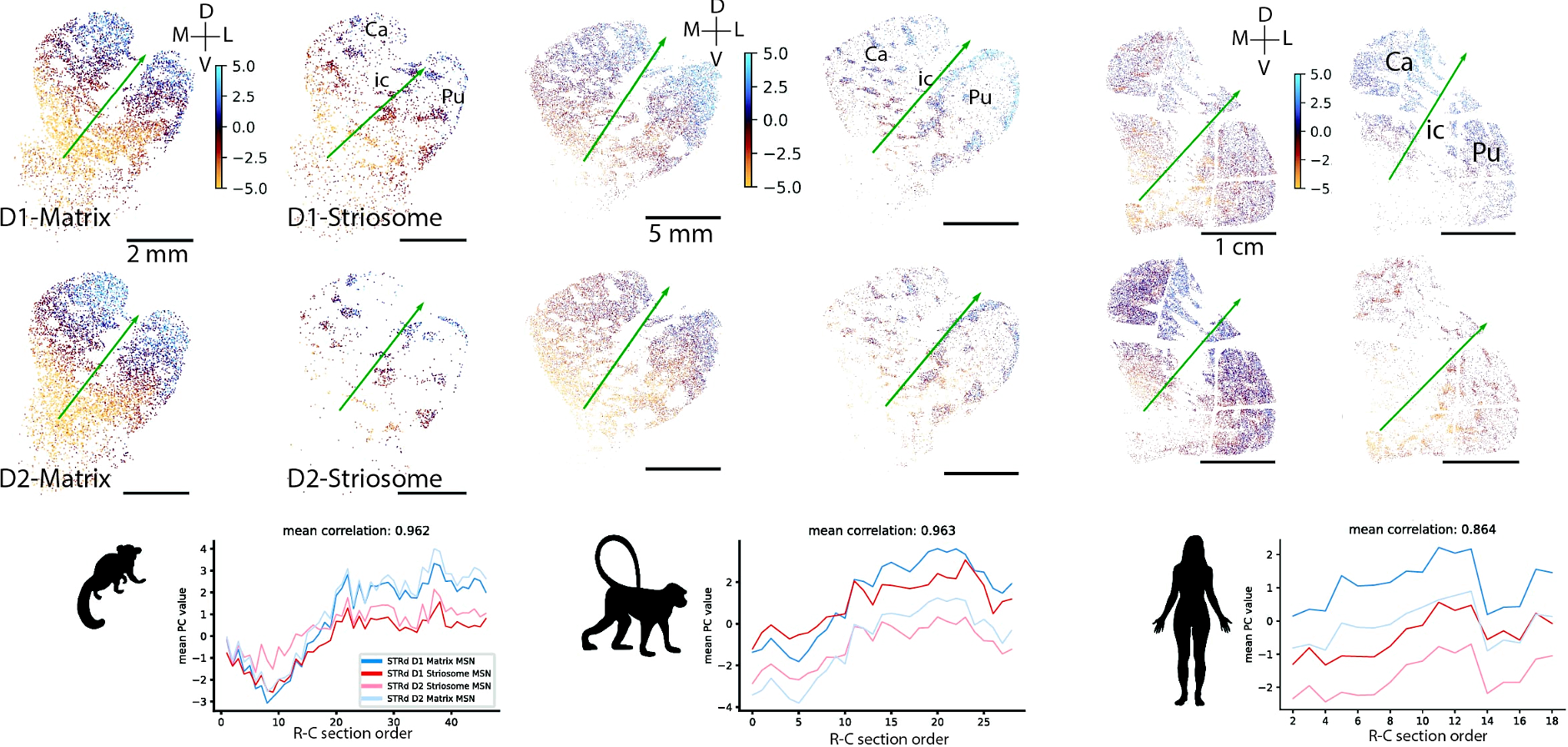
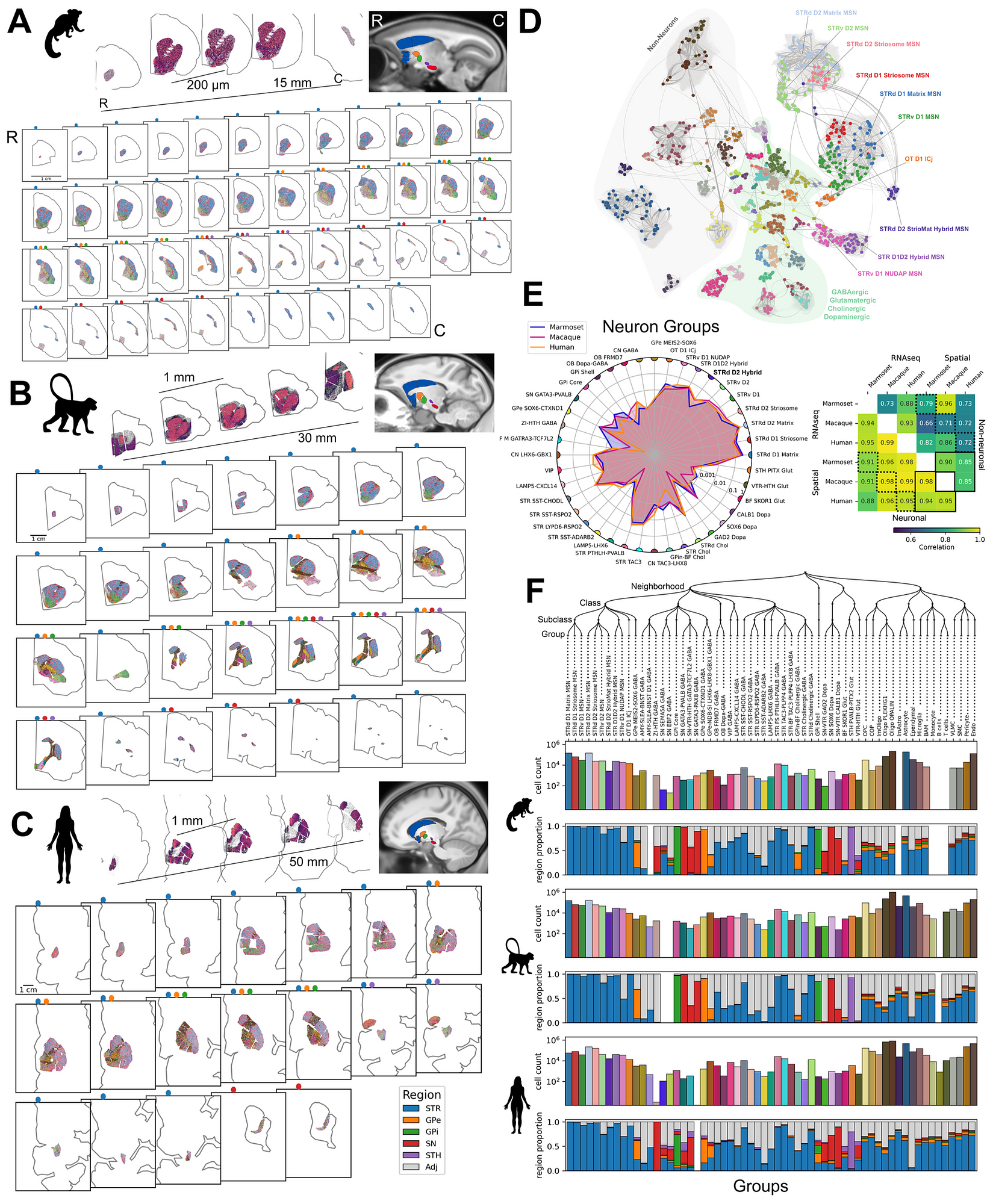
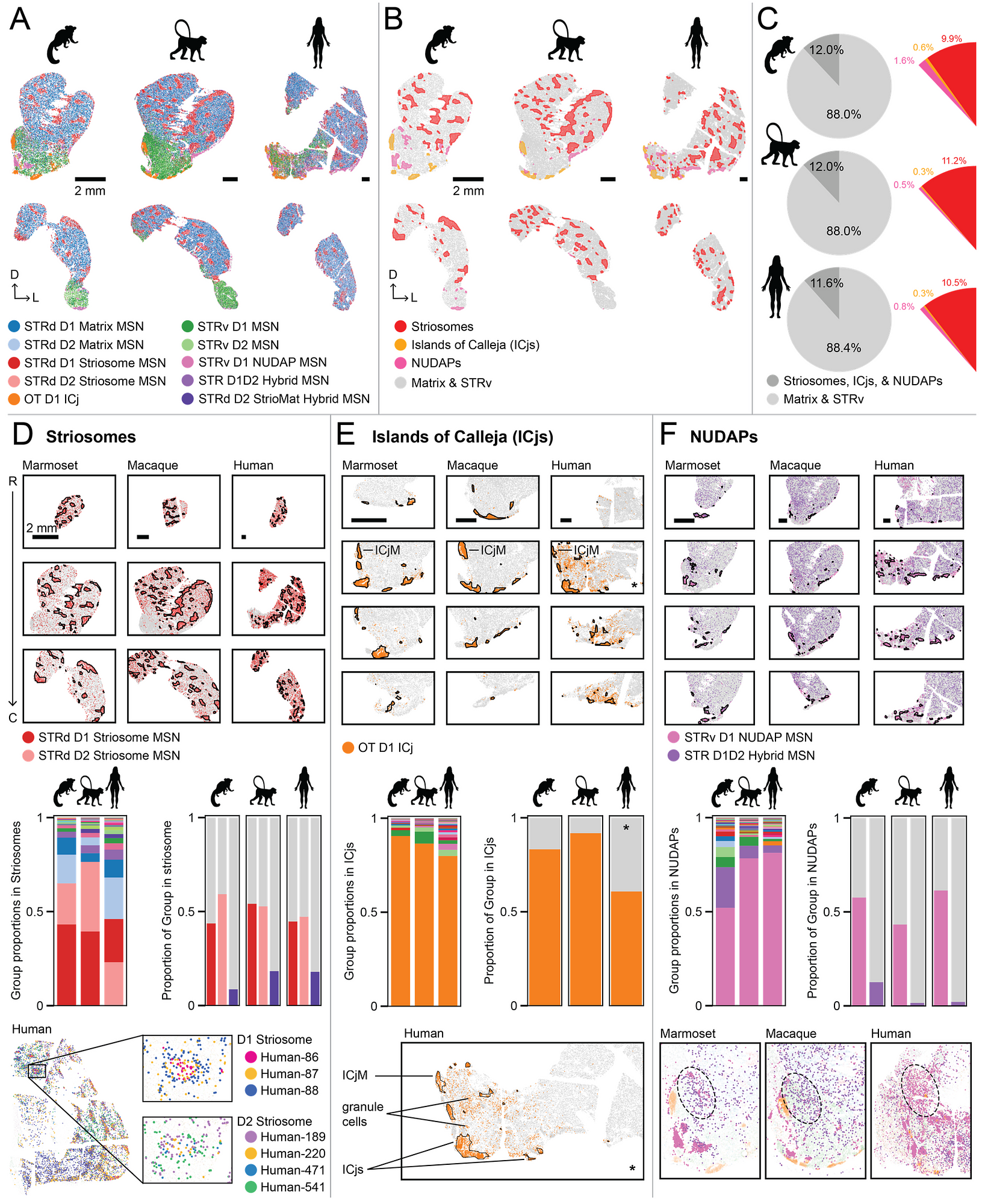
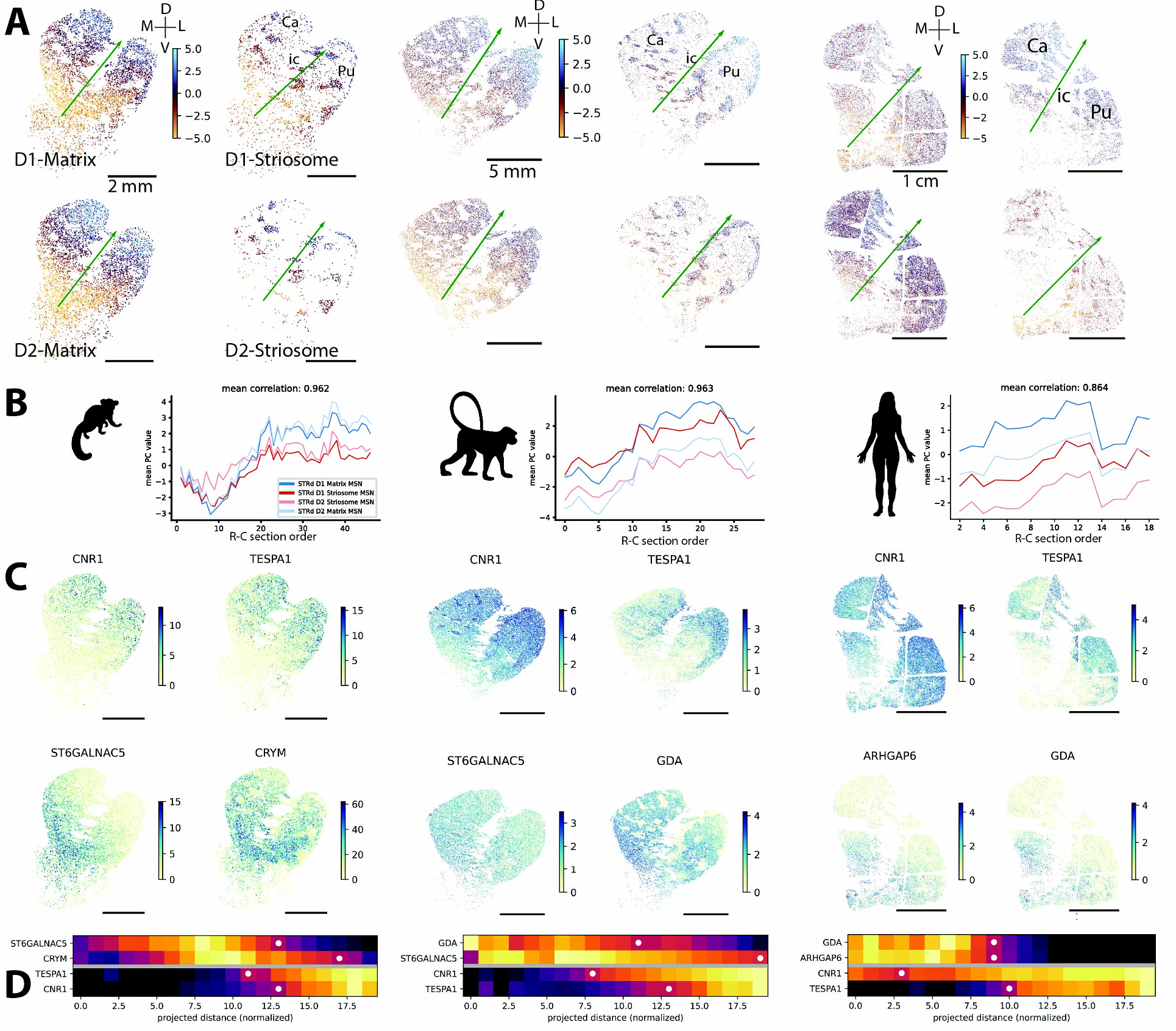
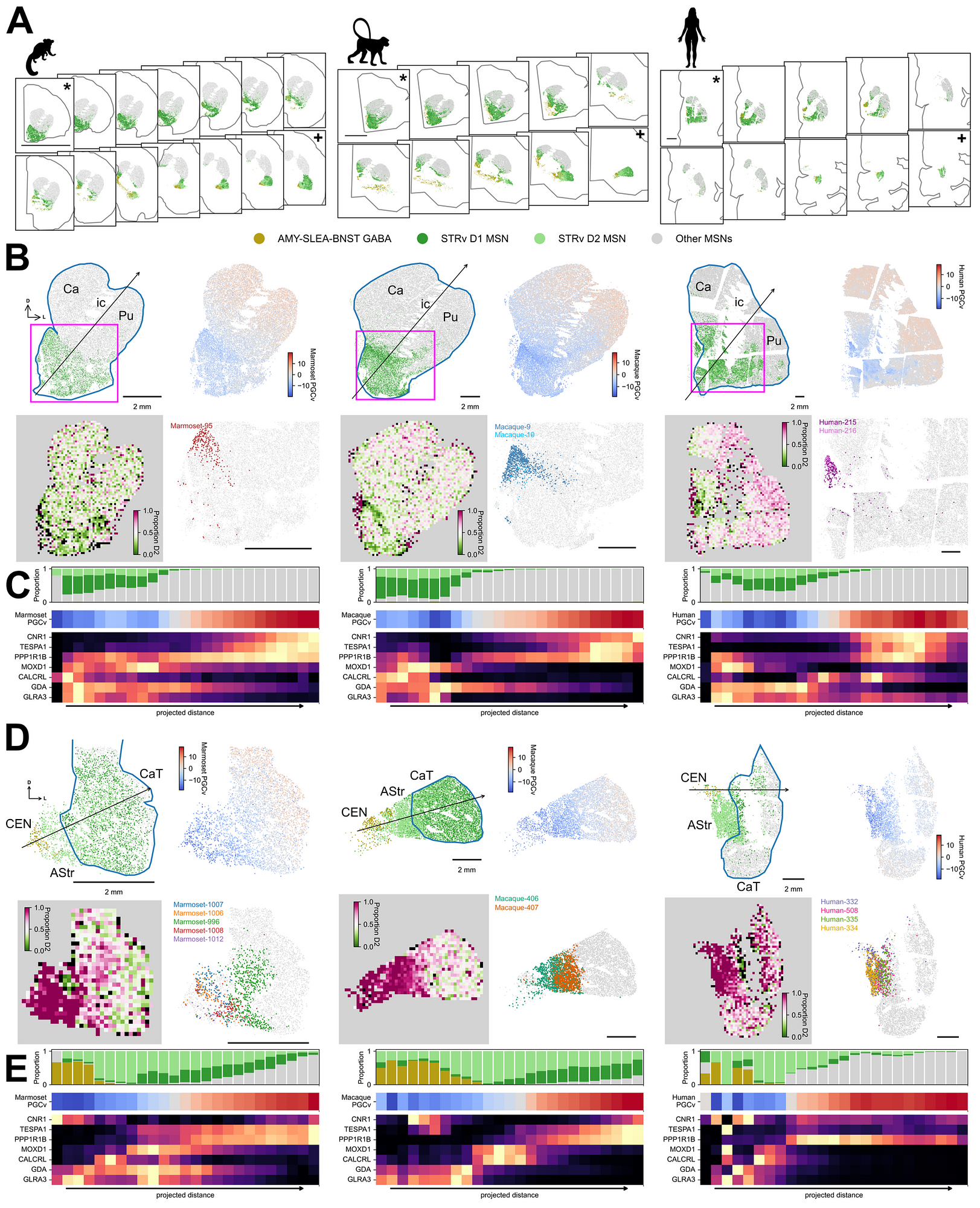
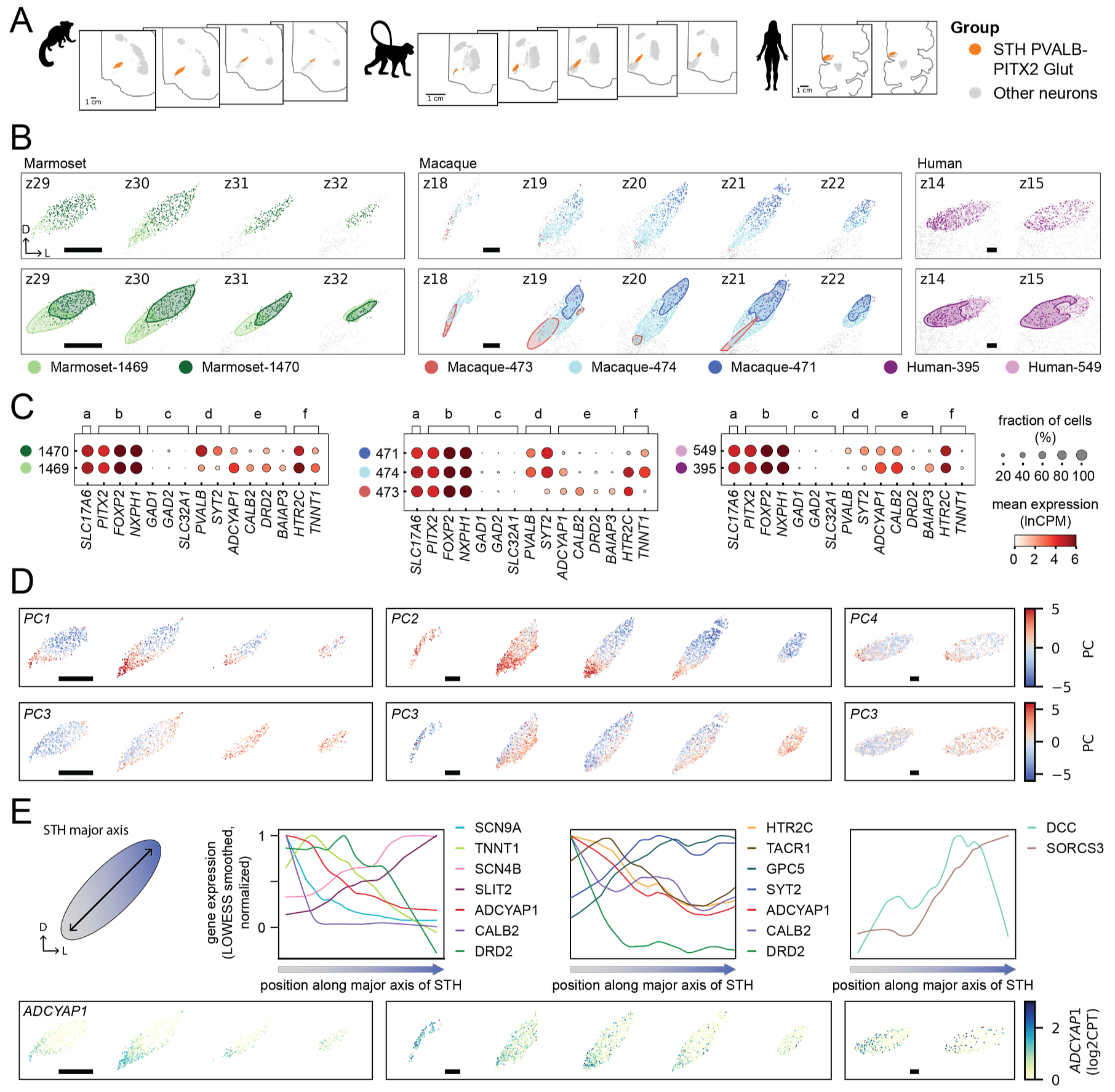
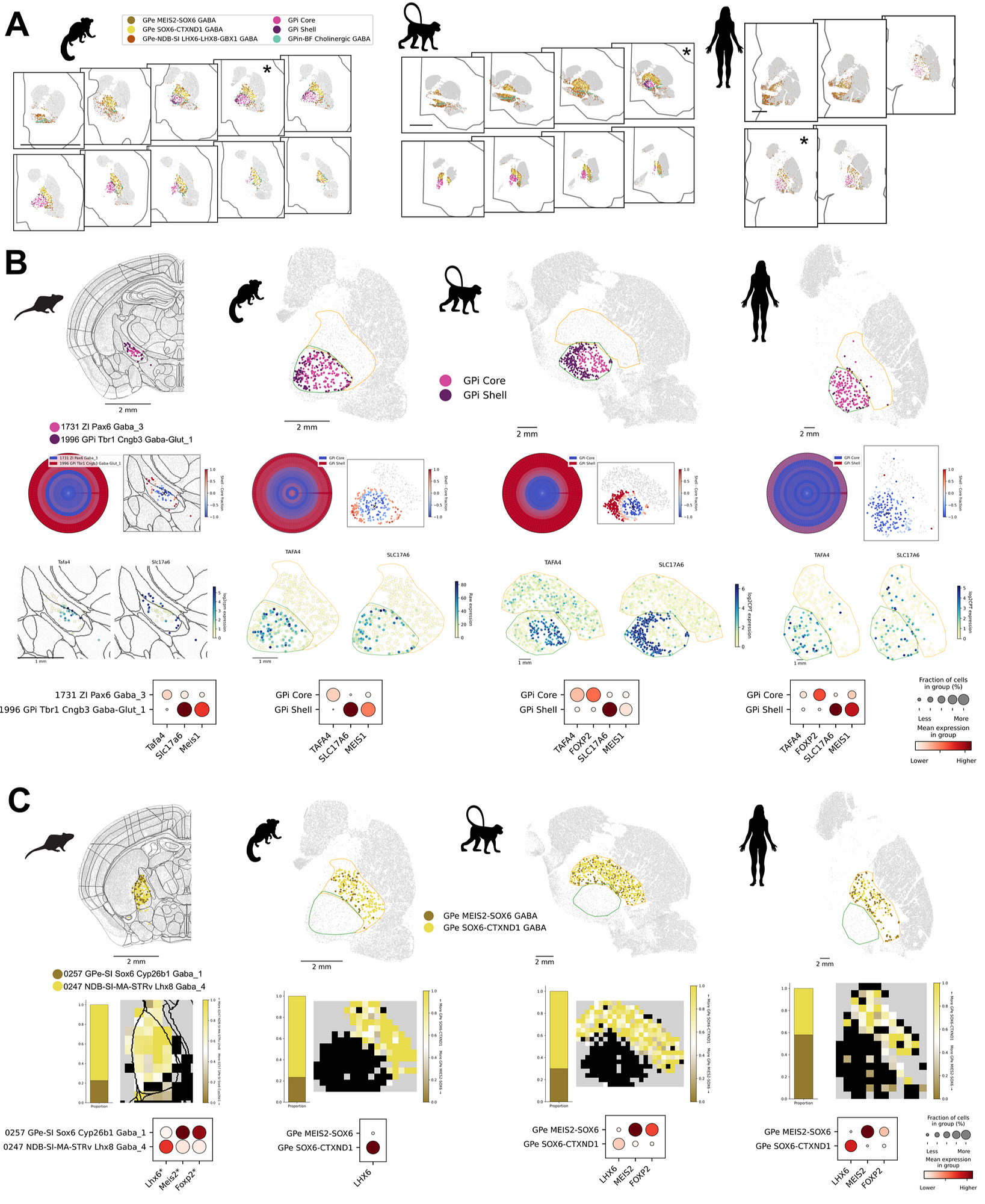
The basal ganglia are interconnected subcortical nuclei with complex topographical organization that orchestrate goal-directed behaviors and are implicated in neurodegenerative movement disorders. We generated a cellular-resolution, spatial transcriptomic atlas of the basal ganglia in human, rhesus macaque, and common marmoset, sampling over one million cells in each species. By integrating spatial data with a cross-species, consensus snRNA-seq cell type taxonomy, this atlas reveals conserved principles of molecular organization within and across structures. The cellular architecture is complex but highly stereotyped, with gene expression gradients superimposed onto discrete compartments. Extensive spatial sampling illuminates 3D gradients of molecular organization in the striatum and reveals cell type-specific core and shell compartments in the primate internal globus pallidus, which is conserved with mouse. This unified, cross-species spatial transcriptomic atlas will be a foundational resource for characterizing the molecular and functional organization of the basal ganglia and their roles in health and disease.
More Information
Gallery
Citation
BibTex
@journal{bib:hewitt:2026,
    author       = { Hewitt, Madeleine N. and Turner, Meghan A. and Johansen, Nelson and McMillen, Delissa A. and Dan, Shu and DeBerardine, Mike and Ruiz, Augustin and Huang, Mike and Quon, Jacob and Fu, Yuanyuan and Kapen, Inkar and Barta, Stuard and Martin, Naomi and Valera Cuevas, Nasmil and Olsen, Paul and Nagra, Josh and Campos, Jazmin and VanNess, Marshall M.  and Ransford, Shea and Juneau, Zoe and Hastings, Sam and Ching, Lindsey and Kunst, Michael and Basu, Soumyadeep and Höllt, Thomas and Li, Chang and Lelieveldt, Boudewijn P. F. and Yazdani, Faraz and Zhang, Qiangge and Levandowski, Kirsten and Feng, Guoping and Rosen, Burke Q. and Glasser, Matthew F. and Hayashi, Takuya and Garcia, Aaron D. and Kana, Omar and Maltzer, Zoe M. and Campagnola, Luke and Jarsky, Tim and Kruse, Lauren and Freiwald, Winrich and Keene, C. Dirk and Van Essen, David C. and Ariza, Jeanelle and Waters, Jack and Krienen, Fenna M. and Bakken, Trygve E. and Hodge, Rebecca and Ng, Lydia and Zeng, Hongkui and Lein, Ed S. and Close, Jennie L. and Long, Brian and Seeman, Stephanie C. },
    title        = { A cross-species spatial transcriptomic atlas of the human and non-human primate basal ganglia },
    journal      = { bioRxiv },
    year         = { 2026 },
    doi          = { 10.1101/2025.11.22.688128 },
    url          = { https://publications.graphics.tudelft.nl/papers/843 },
}