IEEE Transactions on Games
Meaningful content diversity through Non-Uniform Tile WFC
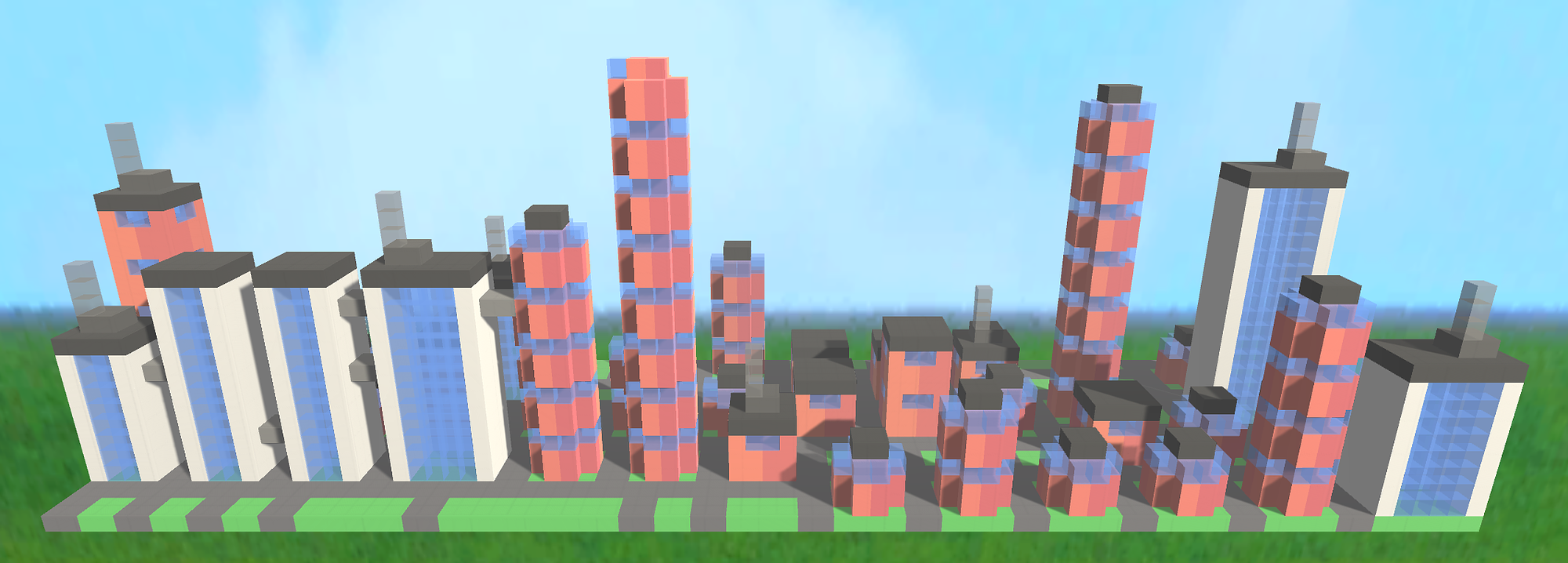
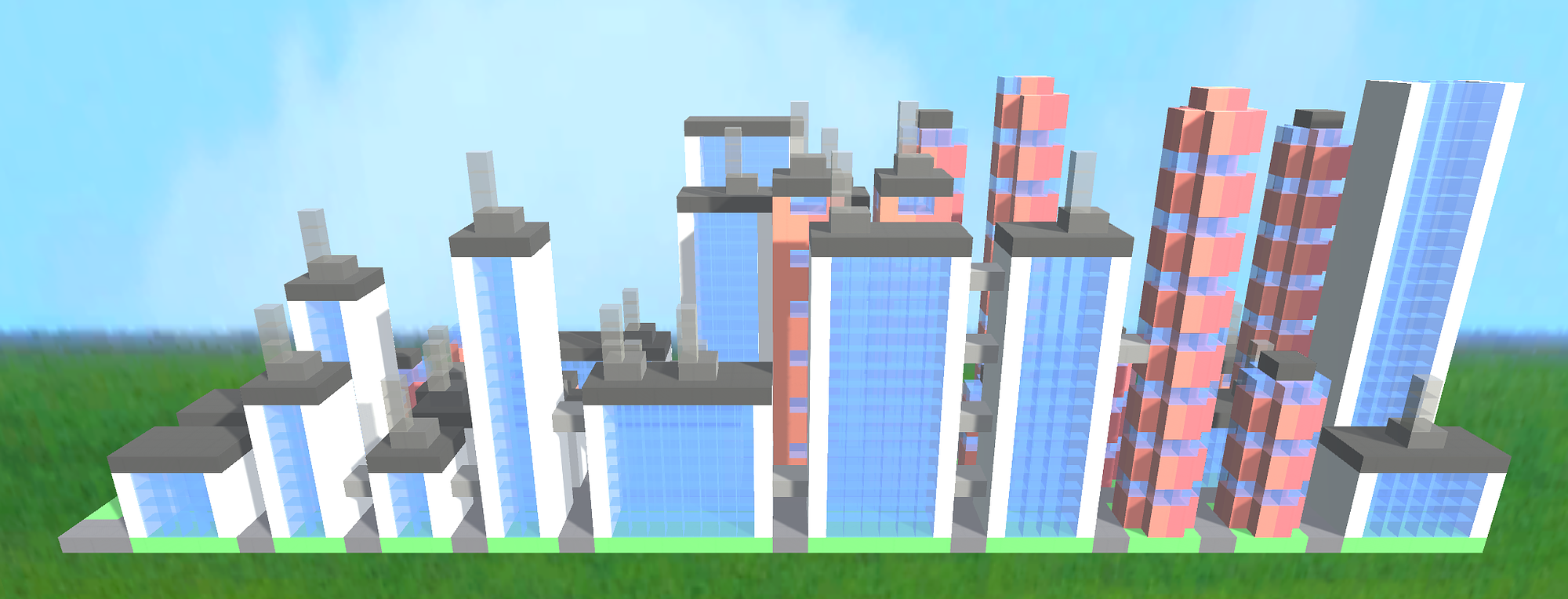
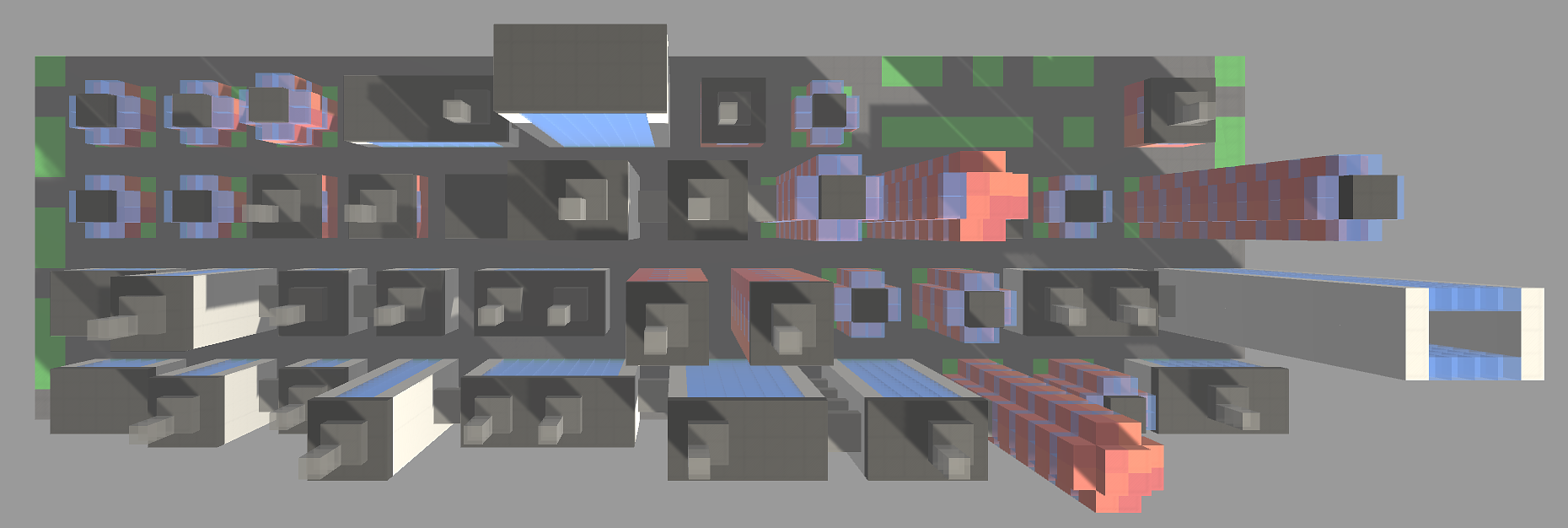
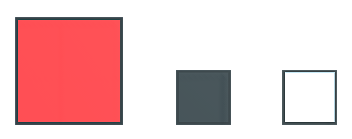
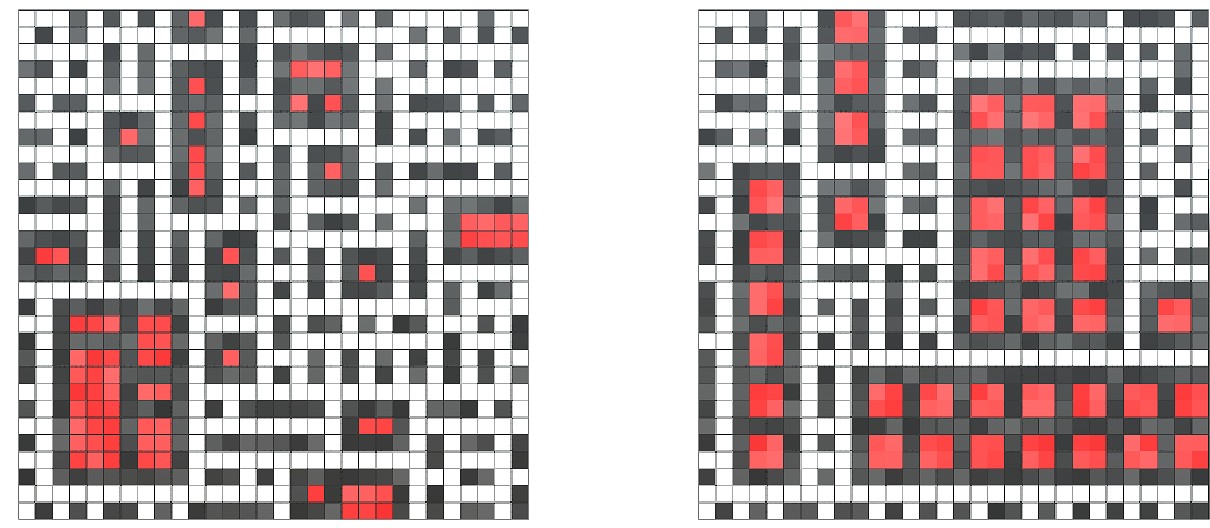
Procedural Content Generation methods enable the creation of varied content algorithmically. One such method is Wave Function Collapse (WFC), a tile-based local constraint solver commonly applied to texture, map and level generation for grid-based content; it is able to create varied output from the same set of rules, usually derived from an input sample. However, a glaring limitation of WFC is that it only operates on tiles of the same shape and size. We propose Non-Uniform Tile Wave Function Collapse (nutWFC), an extension of WFC that supports multi-cellular tiles with varying shapes and sizes, socalled Non-Uniform Tiles (NUTs). Familiar examples of such tiles can be found in LEGO® and Tetris. The algorithm guarantees NUT shape and size preservation even under WFC’s Overlapping Model in three dimensions. We show that nutWFC is a generalization of WFC that harmonizes strict NUT shape and size constraints with WFC’s output diversity. We hypothesize that carefully designed non-uniform tilesets can significantly enhance the diversity of the algorithm’s outputs while effectively safeguarding them against semantic corruption induced by uncontrolled combinations. We illustrate the expressive power and the output diversity of nutWFC with several results that explore the advantages of NUTs and would therefore not be feasible with standard WFC. This article considerably extends and improves our previous IEEE CoG 2025 paper, including a new ‘Results and Discussion’ section.
More Information
Gallery
Citation
BibTex
@article{bib:piepenbrink:2026,
    author       = { Piepenbrink, Rolf and Bidarra, Rafael },
    title        = { Meaningful content diversity through Non-Uniform Tile WFC },
    journal      = { IEEE Transactions on Games },
    year         = { 2026 },
    publisher    = { IEEE },
    doi          = { 10.1109/TG.2026.3696210 },
    url          = { https://publications.graphics.tudelft.nl/papers/847 },
}