2012

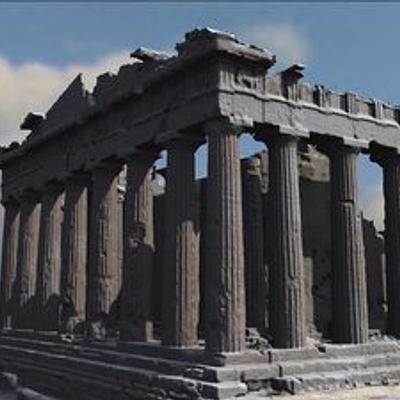
Real-time rendering applications exhibit a considerable amount of spatio-temporal coherence. This is true for camera motion, as in the Parthenon sequence (left), as well as animated scenes such as the Heroine (middle) and Ninja (right) sequences. Diagrams to the right of each rendering show disoccluded points in red, in contrast to points that were visible in the previous frame, which are shown in green (i.e. green points are available for reuse). [Images courtesy of Advanced Micro Devices, Inc., Sunnyvale, California, USA]
Daniel Scherzer, Lei Yang, Oliver Mattausch, Diego Nehab, Pedro V. Sander, et al.
Computer Graphics Forum, 2012
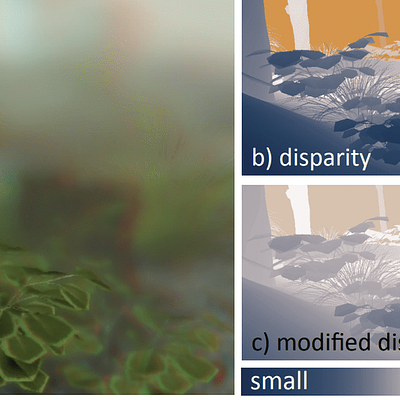
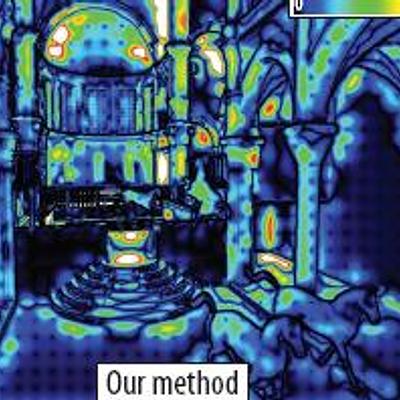
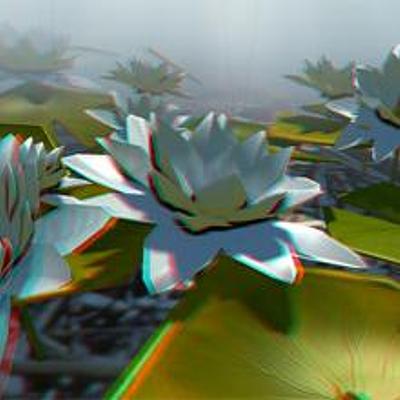
When stereo content (a; b) is manipulated (c), we quantify the perceived change considering luminance, and disparity (d), whereas previous work leads to wrong predictions (e) e. g., for low-texture areas, fog, or depth-of-field (arrows).Please note that all images in the paper, except for disparity and response maps are presented in anaglyph colors.
Piotr Didyk, Tobias Ritschel, Elmar Eisemann, Karol Myszkowski, Hans-Peter Seidel, and Wojciech Matusik
ACM Transactions on Graphics, 2012
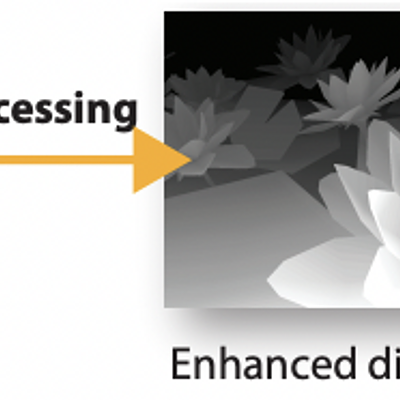
From left to right: Starting from an original depth map a pixel disparity map is computed and then a disparity pyramid is built. After multi-resolution disparity processing, the dynamic range of disparity is adjusted and the resulting enhanced disparity map is produced. The map is then used to create enhanced stereo image.
Piotr Didyk, Tobias Ritschel, Elmar Eisemann, Karol Myszkowski, and Hans-Peter Seidel
In Proceedings of Human Vision and Electronic Imaging, 2012
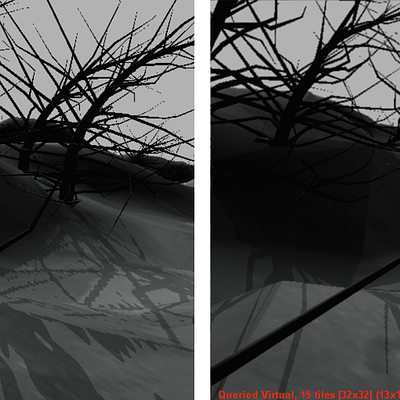
Standard 4,0962 shadow map with perspective warping, rendering at 64 FPS (left). QVSM with a maximum refinement level of 32 × 32 and 1,0242 tiles, rendering at 32 FPS (right). Adaptive subdivision effectively removes aliasing in cases that are difficult for reparametrization and global partitioning methods.
Elmar Eisemann, Ulf Assarsson, Michael Schwarz, Michal Valient, and Michael Wimmer
In Proceedings of SIGGRAPH Courses, 2012
Lionel Baboud and Elmar Eisemann
In Proceedings of Intel Developers Forum, 2012
Orthopaedic workflow for hip prosthesis replacement: A 3D CT-scan (a) is segmented into labels (b). This discrete volume image is converted to a volume mesh (c). Based on medical simulations (d) [1], optimal implant design and positioning can be determined.
Christian Kehl, Daniel F. Malan, and Elmar Eisemann
In Proceedings of 3D NordOst Workshop, 2012
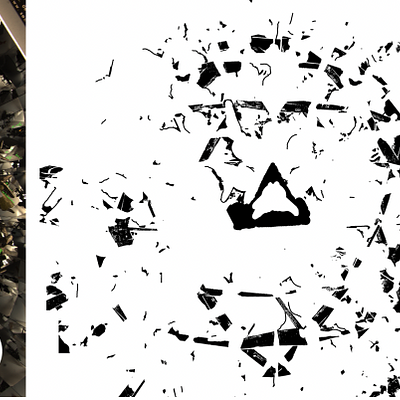
a) Input: Kaleidoscope image. b) User-drawn mask (green checkerboard pattern). c) User-drawn mask isolated. d) Approximate visual hull generated from (c) using image-based shading. e) Resulting labeling via visual hull
Oliver Klehm, I. Reshetouski, Elmar Eisemann, Hans-Peter Seidel, and Ivo Ihrke
In Proceedings of Vision, Modeling, and Visualization, 2012
Piotr Didyk, Tobias Ritschel, Elmar Eisemann, and Karol Myszkowski
2012
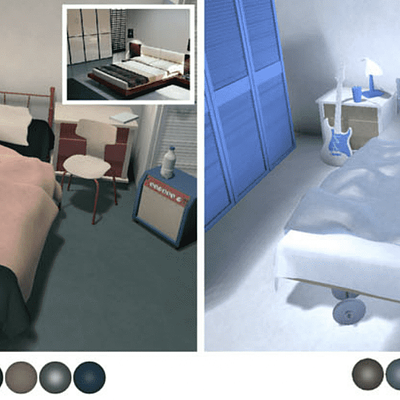
Automatic 3D material style transfer from different source images (insets) to a target 3D scene using our approach
Chuong Nguyen, Tobias Ritschel, Karol Myszkowski, Elmar Eisemann, and Hans-Peter Seidel
Computer Graphics Forum, 2012
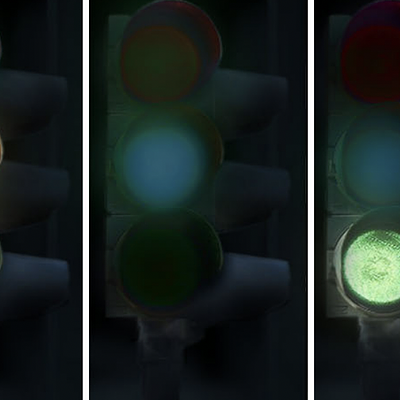
Afterimage simulation of a traffic light over time. Note the over-time change of colors, blur and shape in the afterimage
Tobias Ritschel and Elmar Eisemann
Computer Graphics Forum, 2012
Francesco Banterle, Alessandro Artusi, Tunc Aydin, Piotr Didyk, Elmar Eisemann, et al.
In Proceedings of Eurographics (Tutorials), 2012
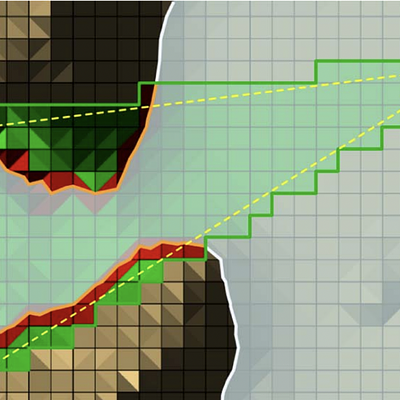
Potential blockers (orange) for rays going from s to T are found in the shaft-like shape (green).
Lionel Baboud, Elmar Eisemann, and Hans-Peter Seidel
IEEE Transactions on Visualization and Computer Graphics, 2012

2011
Matthias B. Hullin, Elmar Eisemann, Hans-Peter Seidel, and Sungkil Lee
ACM Transactions on Graphics, 2011
Dawid Pajak, Robert Herzog, Elmar Eisemann, Karol Myszkowski, and Hans-Peter Seidel
Computer Graphics Forum, 2011
Jing Huang, Tamy Boubekeur, Tobias Ritschel, Matthias Hollaender, and Elmar Eisemann
In Proceedings of Short paper at Eurographics, 2011
Bert Buchholz, Noura Faraj, Sylvain Paris, Elmar Eisemann, and Tamy Boubekeur
In Proceedings of NPAR, 2011
Possible game scenario with lighting using bent normals: 2048×1024 pixels, 60.0 fps, including direct light and DOF on an Nvidia GF 560Ti. Environment mapping produces natural illumination, while bent normals cause colored shadows.
Oliver Klehm, Tobias Ritschel, Elmar Eisemann, and Hans-Peter Seidel
In Proceedings of Vision, Modeling, and Visualization, 2011
Daniel Scherzer, Lei Yang, Oliver Mattausch, Diego Nehab, Pedro V. Sander, et al.
In Proceedings of Eurographics (State of the Art Reports), 2011
Oliver Klehm, Tobias Ritschel, Elmar Eisemann, and Hans-Peter Seidel
In Proceedings of Vision, Modeling, and Visualization, 2011
Piotr Didyk, Tobias Ritschel, Elmar Eisemann, Karol Myszkowski, and Hans-Peter Seidel
ACM Transactions on Graphics, 2011